Is 212.32.226.324 a Real IP? Full Breakdown & Truth Revealed
Introduction
Have you ever come across a strange IP like 212.32.226.324 and wondered if it’s real or something suspicious? You’re not alone. Many users search unusual IP addresses while checking logs, tracking traffic, or investigating security concerns.
At first glance, this IP looks legitimate—but is it actually valid? The short answer is no. However, the full explanation goes much deeper. In this guide, you’ll learn exactly why 212.32.226.324 is invalid, how IP addresses work, and what this means in real-world networking, cybersecurity, and troubleshooting scenarios.
To better understand how real IP addresses function in systems, you can explore 127.0.0.1 localhost explained, which demonstrates how a valid internal IP behaves compared to invalid ones.
What Is an IP Address and Why Does It Matter?
What exactly is an IP address, and why should you care? Simply put, an IP address is a unique identifier assigned to every device connected to a network. It allows devices to communicate with each other, making the internet function smoothly.
An IP address works like a digital home address. When you visit a website, your device sends a request to a server using its IP address, and the server responds back to your IP.
Types of IP Addresses
There are several important types of IP addresses:
- Public IP – Used on the internet (visible globally)
- Private IP – Used inside local networks (like Wi-Fi at home)
- Static IP – Fixed and does not change
- Dynamic IP – Changes over time
Real-World Example
When you type a website like Google into your browser, your system actually connects to an IP address behind the scenes. Without IP addresses, the internet simply wouldn’t work.
Understanding IPv4 Format and Rules
How are IP addresses structured, and what rules do they follow? IPv4 addresses consist of four numbers separated by dots, and each number must fall within a specific range.
A typical IPv4 address looks like this:
192.168.1.1
Each segment is called an octet, and each octet must be between 0 and 255.
According to IPv4 addressing rules explained, this limitation exists because each octet represents an 8-bit binary number, allowing a maximum value of 255.
Why the 0–255 Rule Matters
- Ensures proper routing
- Maintains network consistency
- Prevents invalid configurations
If any number goes beyond 255, the IP becomes invalid.
Is 212.32.226.324 a Real IP Address?
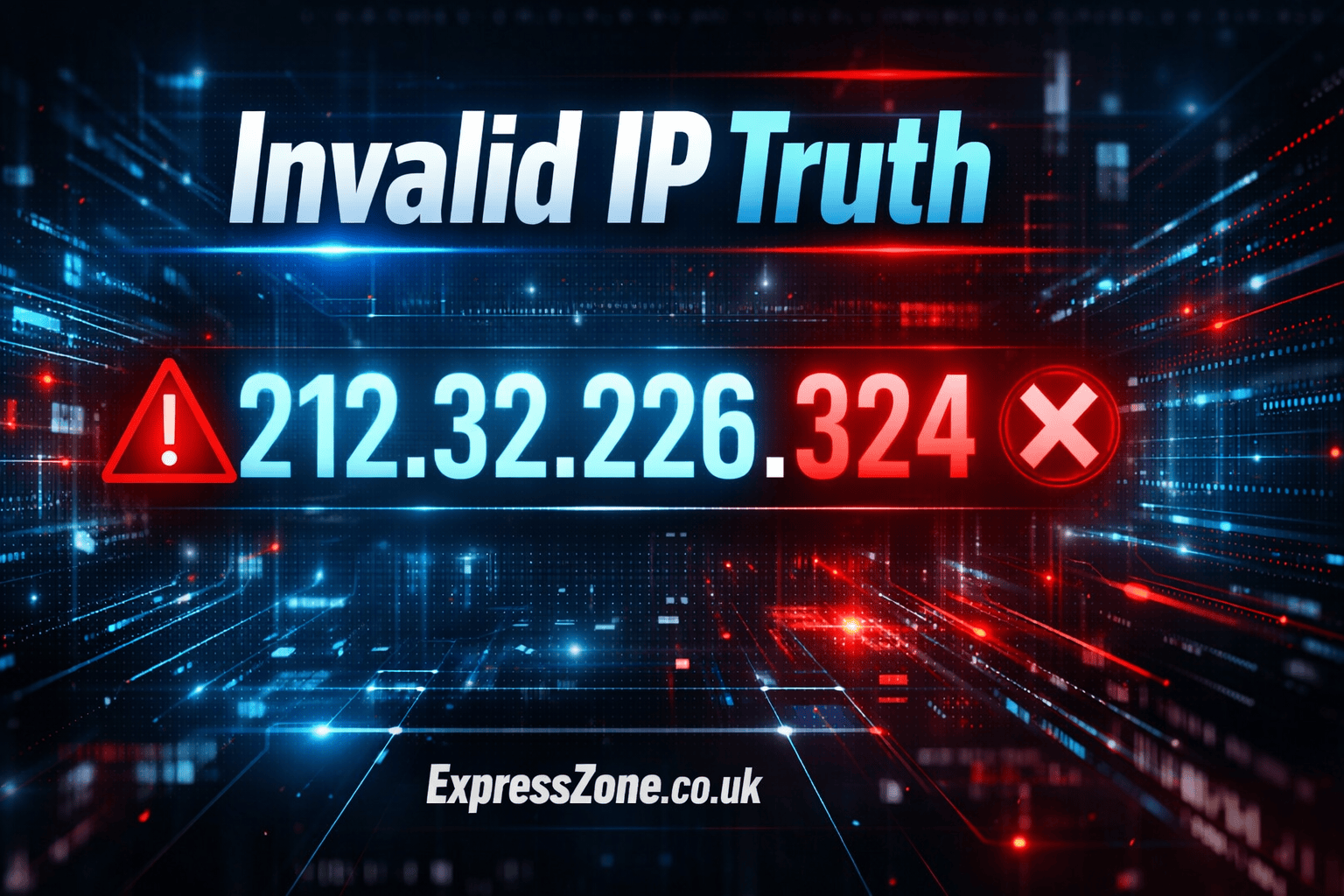
Is 212.32.226.324 valid or usable on the internet? No, it is not a real IP address because it violates the fundamental rules of IPv4 formatting.
Let’s break it down:
- 212 ✔ (valid)
- 32 ✔ (valid)
- 226 ✔ (valid)
- 324 ❌ (invalid — exceeds 255 limit)
Why This Makes It Invalid
The last octet (324) is outside the allowed range. Since IPv4 strictly enforces the 0–255 rule, this address cannot exist in any real network.
What Happens in Systems?
If you try to use this IP:
- Browsers will reject it
- Servers won’t recognize it
- Networking tools will flag it as invalid
Common Reasons Why Invalid IPs Like 212.32.226.324 Appear
Why do people encounter invalid IP addresses in the first place? These usually appear due to simple mistakes or technical issues.
1. Typing Errors
The most common reason is human error—someone accidentally types 324 instead of a valid number like 234.
2. Corrupted Logs
In some cases, system logs may become corrupted, leading to incorrect IP entries.
3. Bot or Script Errors
Automated scripts and bots can generate malformed data, including invalid IP addresses.
4. Fake or Misleading Data
Sometimes, fake IPs are intentionally used in spam or malicious activities to confuse systems or users.
Valid vs Invalid IP Addresses (Clear Comparison)
What’s the difference between a valid and invalid IP address? The answer lies in formatting and usability.
Valid IP Examples
- 8.8.8.8
- 192.168.1.1
- 172.16.0.1
Invalid IP Examples
- 212.32.226.324
- 999.999.999.999
- 256.100.50.25
Key Differences
| Feature | Valid IP | Invalid IP |
|---|---|---|
| Range Compliance | 0–255 per octet | Exceeds allowed range |
| Network Usage | Fully functional | Cannot be used |
| System Behavior | Accepted | Rejected |
Real-World Use Cases of IP Addresses
Where are IP addresses used in everyday technology? Practically everywhere.
1. Website Hosting
Servers use IPs to deliver website content to users.
2. Cybersecurity
Security systems monitor IP addresses to detect suspicious activity.
3. Networking
Devices communicate within networks using IP addresses.
Security Risks and Misconceptions Around Suspicious IPs
Are invalid IPs dangerous? Not directly—but they can be misleading.
Fake IP Usage
Attackers sometimes use invalid or spoofed IPs to hide their identity.
Misinterpretation
Seeing an invalid IP in logs may cause unnecessary panic if not understood properly.
Best Practice
Always validate IP addresses before assuming they are malicious.
How to Check If an IP Address Is Valid
How can you verify whether an IP address is real? There are simple and effective methods.
1. Manual Check
Ensure all four octets are between 0 and 255.
2. Online Tools
- IP lookup tools
- WHOIS databases
3. Command Line
pingnslookup
If the IP fails these checks, it’s likely invalid.
Public vs Private vs Special IPs (Like 127.0.0.1)
What are the different categories of IP addresses? Understanding this helps clarify how networks operate.
For example, how localhost IP works explains how 127.0.0.1 is used internally by your system for testing.
Public IP
Used on the internet and assigned by ISPs.
Private IP
Used within local networks (e.g., home Wi-Fi).
Loopback IP
- 127.0.0.1
- Used for internal testing
IPv4 vs IPv6 – The Future of IP Addressing
Is IPv4 still relevant today? Yes, but it has limitations.
IPv4 Limitations
- Limited number of addresses
- Increasing demand
IPv6 Advantages
- Vast address space
- Improved performance
- Better security features
Expert Insights & Practical Troubleshooting
How do professionals deal with invalid IP addresses? From real-world experience, invalid IPs often show up during debugging.
Log Analysis
Developers frequently encounter malformed IPs in logs and must filter them out.
Traffic Filtering
Firewalls block invalid IP requests automatically.
Real Example
A developer might find 212.32.226.324 in logs and quickly identify it as a formatting error rather than a real threat.
FAQs (Frequently Asked Questions)
Is 212.32.226.324 a real IP address?
No, it is not valid because the last number exceeds the allowed range.
Why is it invalid?
IPv4 rules require each octet to be between 0 and 255, and 324 is خارج this range.
Can invalid IPs be harmful?
Not directly, but they can appear in suspicious or misleading data.
How can I check IP validity?
Use manual checks, online tools, or command-line utilities.
What is the correct IP format?
Four numbers separated by dots, each between 0–255.
Conclusion
So, is 212.32.226.324 a real IP address? The answer is clear: no. It is an invalid IP due to incorrect formatting, specifically because one segment exceeds the allowed range.
Understanding how IP addresses work not only helps you avoid confusion but also improves your technical knowledge, security awareness, and troubleshooting skills. Whether you’re a beginner or a professional, knowing how to identify valid and invalid IPs is an essential skill in today’s digital world.

Kamran Khatri is a versatile writer and editor at ExpressZone.co.uk, bringing fresh perspectives and insightful commentary across a wide range of topics. With a passion for exploring diverse subjects—from technology, business, and finance to lifestyle, travel, and the arts—Kamran aims to inform, inspire, and engage readers through well-researched articles and thought-provoking content.
His work spans multiple categories including health, education, pets, entertainment, real estate, and sustainability, reflecting his commitment to delivering knowledge that connects with everyday life. Whether breaking down the latest trends, sharing practical tips, or highlighting cultural insights, Kamran’s writing combines clarity with creativity.
When he’s not crafting stories for ExpressZone.co.uk, Kamran enjoys keeping up with global developments, exploring innovative ideas, and connecting with readers who share his curiosity about the world.